The solar system has eight planets. In order from the Sun: Mercury, Venus, Earth, Mars, Jupiter, Saturn, Uranus, and Neptune. The first four are rocky terrestrial planets; Jupiter and Saturn are gas giants, and Uranus and Neptune are ice giants.
知識整理:Hey World 專案 · 資料依 NASA 行星介紹整理 · 更新於 Compiled for Hey World from the NASA sources linked below. This independent project is not affiliated with NASA.
An orbital period is the time a planet takes to travel once around the Sun, not the length of its day. Values below are approximate, expressed in Earth days or Earth years.
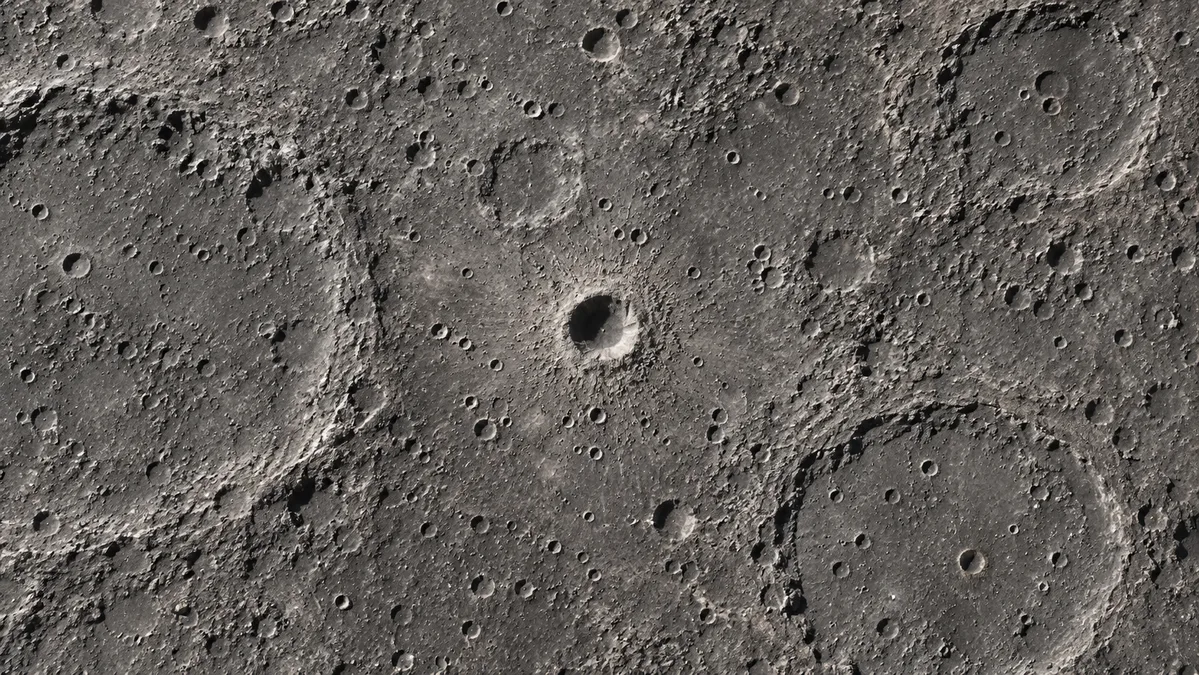
水星是太陽系最小的行星。它的灰褐色岩石地表布滿撞擊坑,幾乎沒有能保留熱量的厚大氣,只有極稀薄的外逸層。因此,白天與夜晚的地表溫差很大。Hey World 的水星下降視角朝向隕石坑地形,近景是 AI 重建,不是探測器實拍的降落影片。
Mercury is the smallest planet in the solar system. Its gray-brown, rocky surface is covered with impact craters. Instead of a substantial atmosphere, it has a very thin exosphere, and surface temperatures vary sharply between day and night. The Hey World descent points toward cratered terrain; the close-up is an AI reconstruction, not footage of a spacecraft landing.
Venus is the second planet from the Sun and is similar in size to Earth. Its thick, mostly carbon-dioxide atmosphere drives an intense greenhouse effect, while clouds contain sulfuric acid. Distance from the Sun alone does not determine a planet’s temperature. Hey World retains its original Venus journey imagery as a visual experience, not a measurement of terrain or atmospheric conditions.
Our home, and the only world known to support life.
分類 · Type
岩質行星Terrestrial planet
公轉週期 · Orbital period
365.25 個地球日365.25 Earth days
地球是距離太陽第三近的行星,也是太陽系中唯一在地表擁有液態水海洋的行星。大氣主要由氮氣與氧氣組成,海洋、大氣和地表共同形成我們熟悉的環境。Hey World 保留原版地球下降動畫;這段旅程提供認識行星的入口,實際觀測與科學數據請閱讀下方 NASA 資料。
Earth is the third planet from the Sun and the only planet in our solar system with liquid-water oceans on its surface. Its atmosphere consists mainly of nitrogen and oxygen. Oceans, air, and land together shape our familiar environment. Hey World preserves its original Earth descent animation; use the NASA source below for observations and scientific data behind the experience.
Mars is the fourth planet from the Sun. Iron oxide in its soil gives it a reddish appearance. The planet has a thin atmosphere, craters, volcanoes, and canyons, while ancient river channels provide evidence of past water activity. Evidence of water is not evidence that life has been discovered there. Hey World begins at Mars and retains its original introduction and descent animations.
The largest planet has no true surface to land on.
分類 · Type
氣體巨星Gas giant
公轉週期 · Orbital period
約 12 個地球年About 12 Earth years
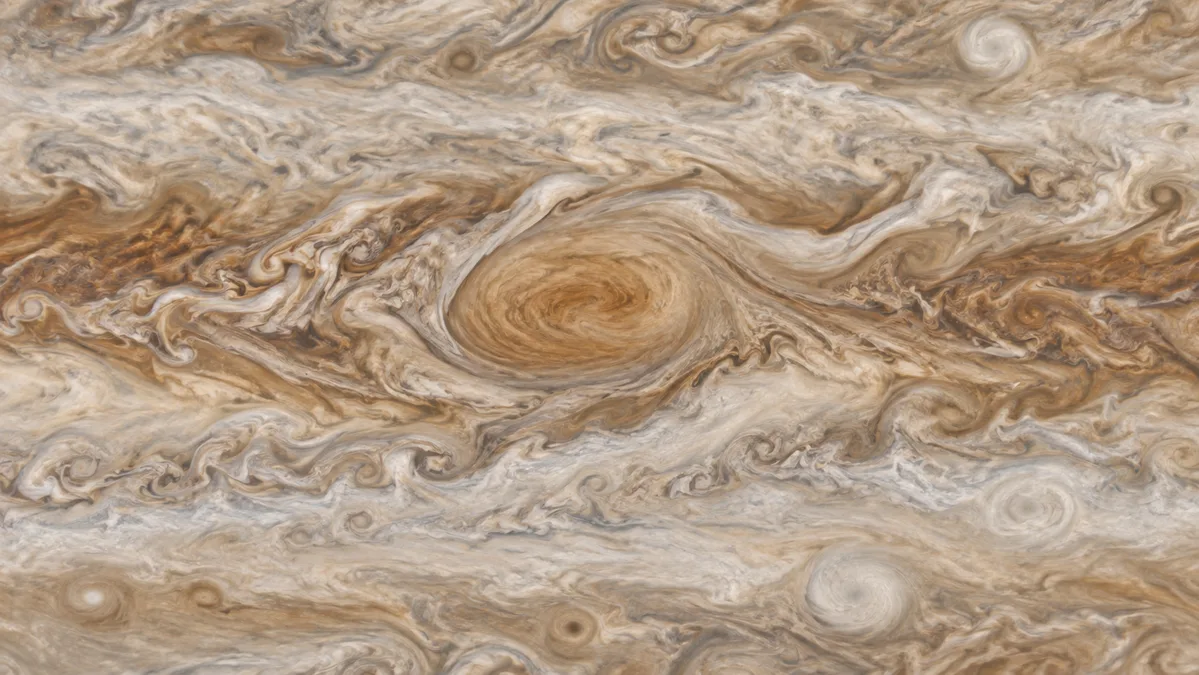
木星是距離太陽第五近的行星,主要由氫與氦組成。從外太空可見的條帶與巨大風暴屬於它的大氣,而不是陸地。隨著深入,壓力和溫度會持續增加;不能把雲頂當成地板。Hey World 的俯視下降止於示意雲層,以 AI 環境圖與運鏡動畫表現這個氣體世界。
Jupiter is the fifth planet from the Sun and consists mainly of hydrogen and helium. Its visible bands and large storms are features of the atmosphere, not land. Pressure and temperature rise deeper inside, so the cloud tops are not a floor. The Hey World overhead descent ends in an illustrative cloud environment created with an AI image and camera animation.
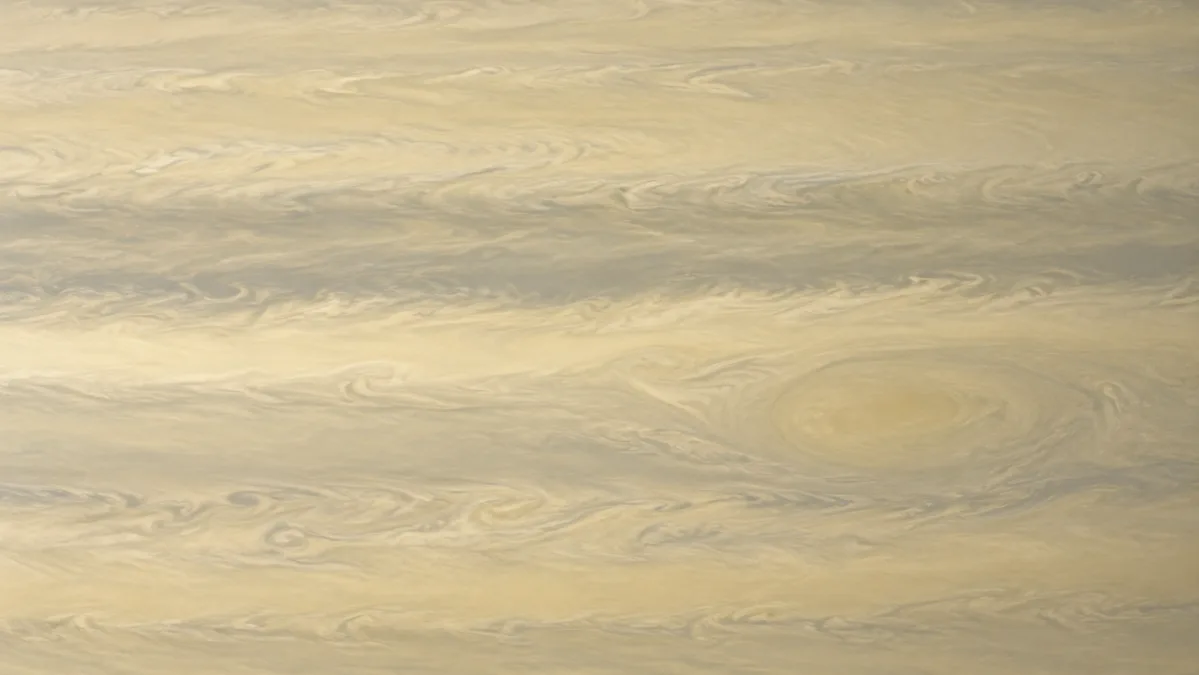
Saturn is the sixth planet from the Sun and is also made mostly of hydrogen and helium. Its rings are not a single solid disk: they contain countless particles of different sizes, mostly ice with rock and dust. Saturn has no true surface to stand on. The close-up in this experience reconstructs clouds; the descent does not imply that people could land there.
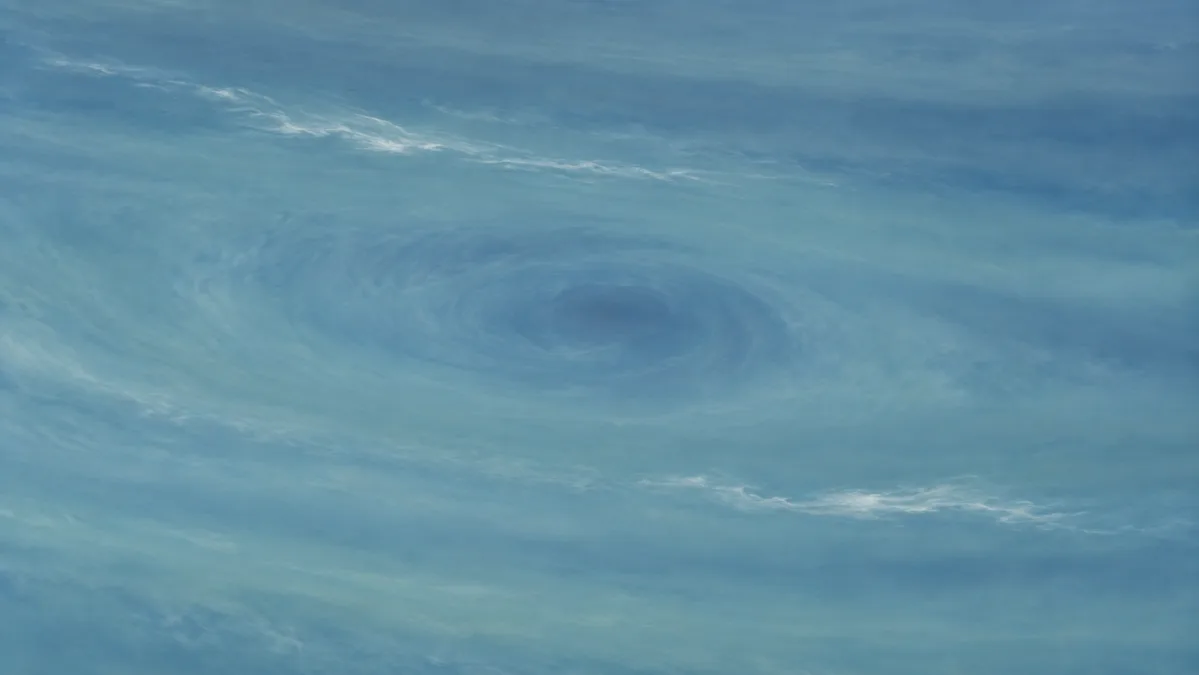
Uranus is the seventh planet from the Sun, with an axial tilt of about 98 degrees. It is an ice giant, but the word “ice” does not mean there is an outer frozen plain to walk on: it has no true surface for landing. Atmospheric methane contributes to its blue-green appearance. The pale cyan cloud scene here is an illustration, not a recording of a probe descending.
Hey World 的天王星近景為 AI 重建示意,非 NASA 實拍。 AI-generated Uranus environment for Hey World, not a NASA photograph.
08
海王星Neptune
最外側的行星,有強烈的風與動態大氣。
The outermost planet has powerful winds and an active atmosphere.
分類 · Type
冰巨星Ice giant
公轉週期 · Orbital period
約 165 個地球年About 165 Earth years
海王星是距離太陽第八近的行星,同樣屬於冰巨星,沒有固體表面可供著陸。NASA 記載其風速可超過每小時 2,000 公里。天王星與海王星的真實色彩比一些早期高對比影像更接近;本站參考校正色彩資料,以較自然的青藍色呈現 AI 雲層示意。
Neptune is the eighth planet from the Sun. Like Uranus, it is an ice giant without a solid surface to land on. NASA reports winds that can exceed 2,000 kilometers per hour. Uranus and Neptune are closer in true color than some early high-contrast images suggest. This site uses corrected-color references for a more natural blue-cyan AI cloud illustration.
From the Sun outward: Mercury, Venus, Earth, Mars, Jupiter, Saturn, Uranus, and Neptune. The interactive route begins at Mars for the experience; it does not follow orbital order.
Venus is the hottest planet, even though Mercury is closer to the Sun. Venus’s dense, mostly carbon-dioxide atmosphere produces an intense greenhouse effect.
可以降落在木星或其他巨行星上嗎?Can you land on Jupiter or the other giant planets?
Jupiter, Saturn, Uranus, and Neptune have no Earth-like solid surface to stand on. Their descents here end in atmospheric cloud scenes. These are visual simulations, not viable landing routes.
這些下降動畫是真實拍攝嗎?Are the descents real spacecraft footage?
不是。水星、木星、土星、天王星與海王星的近景由 AI 生成,搭配全景參考素材與六秒運鏡製作成動畫。地球、金星與火星保留本專案原有影像;本站不把這些旅行畫面當作科學觀測影片。
No. The five added planets use AI-generated close-up environments, globe references, and six-second camera animations. Earth, Venus, and Mars retain the project’s original imagery. None of these journeys is presented as scientific observation footage.
手機與鍵盤要怎麼切換行星?How do I switch planets on a phone or with a keyboard?
桌面版可直接選行星名稱;手機版先打開 Menu 選單,再選 Planets 行星。也可點入口前往下一站。鍵盤使用 Tab 移到按鈕後按 Enter;若系統啟用減少動態效果,畫面會跳過大幅移動。
On desktop, select a planet name. On phones, open Menu, then Planets. The portal takes you to the next destination. Use Tab and Enter with a keyboard. The experience respects the system’s reduced-motion preference.
關於 Hey WorldAbout this project
Hey World 是一個獨立的互動太空視覺專案,把行星旅行與可查證的入門知識放在一起。這份指南以 NASA 公開資料為基礎,由 AI 協助整理繁體中文與英文說明。視覺模擬負責引起好奇;科學事實與圖片性質則在每一段標明。
Hey World is an independent interactive space project pairing visual journeys with verifiable introductory information. This guide was compiled with AI assistance from public NASA resources in Traditional Chinese and English. The visual experience invites exploration, while the text identifies scientific sources and the nature of the imagery.
本專案與 NASA 無隸屬或背書關係;AI 近景不是 NASA 照片。地球、金星與火星維持原版影像;五顆新增行星的圖像、來源與生成方式可在公開專案中查閱。
This project is not affiliated with or endorsed by NASA. AI close-ups are not NASA photographs. The public repository documents the added imagery, credits, and generation method.
Report factual or display issues through GitHub Issues. This project adds no analytics script or sign-up form. GitHub Pages and the media providers still receive the network requests needed to serve pages and videos.
參考資料與影像來源References and image credits
各行星段落旁附有對應的 NASA 原始資料頁;這裡集中列出,方便繼續閱讀。
Each planet section links to its NASA source. All eight are collected here for further reading.
五顆新增行星的全景素材署名:水星 NASA/Johns Hopkins APL/Carnegie Institution of Washington;木星 NASA/JPL/Space Science Institute;土星 NASA/JPL-Caltech/Space Science Institute;天王星 NASA/JPL-Caltech;海王星 Patrick Irwin/University of Oxford/NASA(CC BY 4.0,自校正色彩比較圖裁切)。詳細原圖連結見完整署名清單。
Globe references credit NASA and the mission teams listed above; Neptune’s corrected-color reference credits Patrick Irwin, University of Oxford, and NASA under CC BY 4.0, cropped from a comparison graphic. These globe references are distinct from the AI-generated close-ups shown on this page.
 Hey World